Pancit Canton Bihon Recipe: Flavorful and Non-Mushy Filipino Noodles
Pancit Canton Bihon
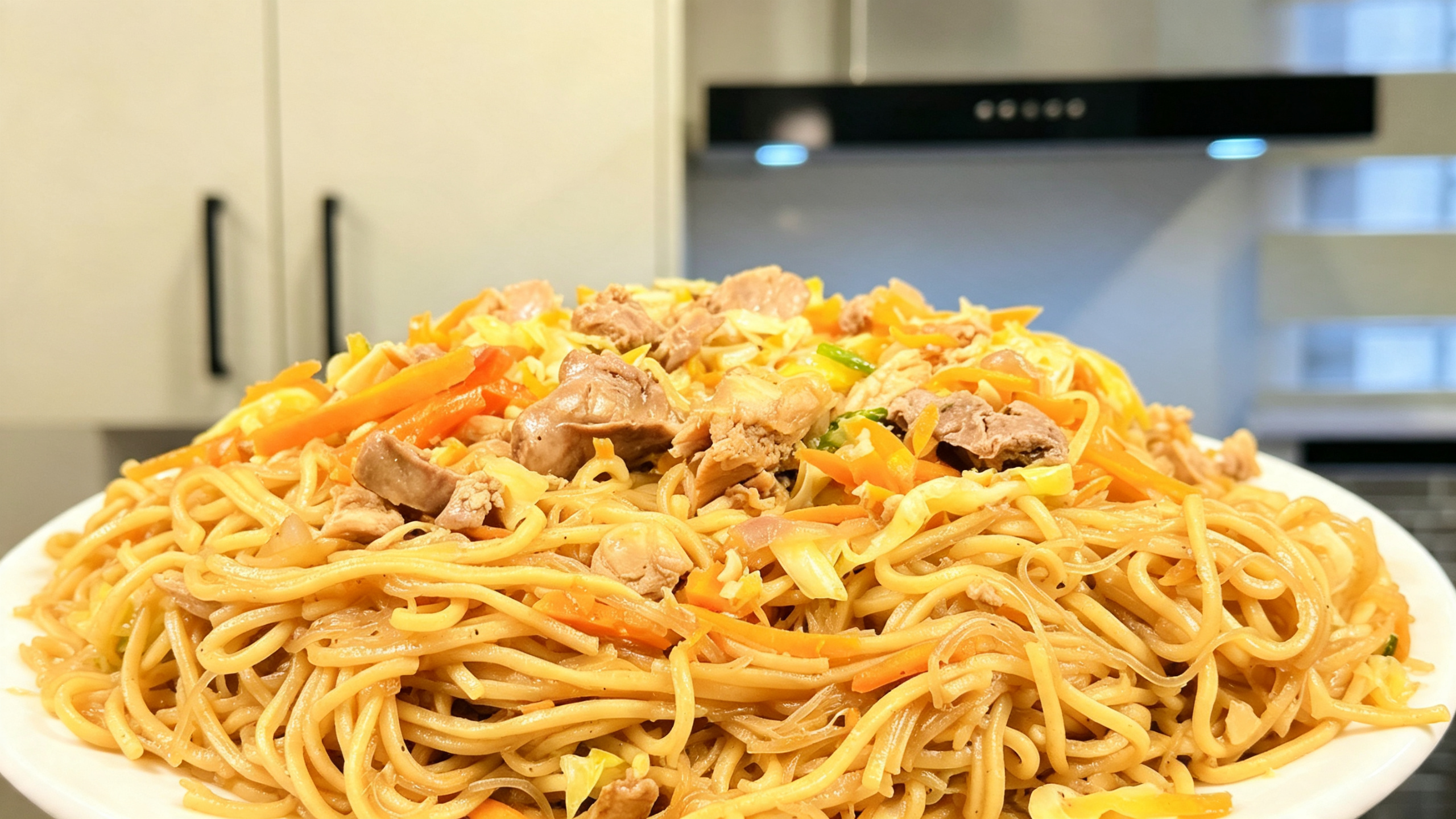
Pancit Canton Bihon is one of those Filipino noodle dishes that feels right for almost any occasion. It is colorful, filling, flavorful, and easy to share with the whole family. This Pancit Canton Bihon recipe combines chewy pancit canton with delicate bihon, tender shredded chicken, savory chicken liver, and plenty of vegetables.
The result is a pancit that is flavorful without becoming soggy, and it remains delicious even after it has cooled.
What I especially like about this Pancit Canton Bihon is the way the noodles are cooked. Instead of cooking the noodles in plain water and seasoning them afterward, the canton and bihon are cooked directly in the seasoned broth. This allows the noodles to absorb the flavor as they cook.
The chicken broth, soy sauce, oyster sauce, chicken cubes, liquid seasoning, black pepper, chicken, and liver all contribute flavor to the noodles.
This is also a practical recipe for celebrations because it makes a generous batch that is perfect for sharing. Serve this Pancit Canton Bihon for birthdays, fiestas, holidays, family gatherings, merienda, lunch, or dinner. Add calamansi just before eating for a fresh citrusy finish.
Why This Pancit Canton Bihon Is Different
One of the most important steps in this recipe is removing the cooked chicken, liver, and vegetables from the pan before adding the noodles. Only the flavorful liquid remains.
The noodles then absorb this seasoned broth until almost all of the liquid is gone.
This method helps control the moisture in the finished Pancit Canton Bihon. The vegetables are also cooked briefly, so they do not spend a long time simmering with the noodles.
Half of the vegetables are mixed back into the pancit at the end, while the rest are arranged on top. This gives the dish a nice balance of flavor, texture, and color.
Another thing I love about this Pancit Canton Bihon is that it does not rely on one ingredient for all the flavor. The chicken broth creates the base, the soy sauce brings saltiness and color, the oyster sauce adds savory depth, the chicken liver adds richness, and the black pepper gives the dish a gentle peppery taste.
Then, the calamansi added at the end gives the pancit a fresh, slightly tangy finish.
8 Tips for Perfect Pancit Canton Bihon
1. Cook the chicken just until done
Since the chicken breast will be cooked again later with the other ingredients, avoid boiling it for much longer than necessary. Overcooking chicken breast can make it dry and tough, especially after shredding and sautéing. Cook until the center is fully cooked, then remove it from the broth.
2. Brown the garlic lightly
Let the minced garlic become aromatic and light brown, but do not let it burn. Burnt garlic can give the entire Pancit Canton Bihon an unpleasant bitter taste.
3. Sauté the chicken liver
Cook the chicken liver with the shredded chicken for about 2 to 3 minutes. This helps cook the liver and lessen its strong raw-liver smell before the broth is added.
4. Cook the vegetables briefly
Once the heat is increased to high, the vegetables only need about 1 minute of cooking before the chicken broth goes in. This helps keep them from becoming too soft.
5. Remove the meat and vegetables before cooking the noodles
This is one of the most important steps in this Pancit Canton Bihon recipe. You want the noodles to absorb the seasoned liquid without having all the vegetables and meat taking up space in the pan.
6. Mix continuously while cooking the noodles
The canton and bihon need to absorb the liquid evenly. Keep mixing while they cook so the noodles cook consistently and do not stick together.
7. Taste before the noodles are completely finished
As the noodles absorb the broth, the seasoning becomes more concentrated. Taste the Pancit Canton Bihon while it is cooking and add more soy sauce only when needed.
8. Have hot water ready if needed
Different brands and types of pancit canton and bihon may absorb liquid differently. While the noodles are cooking, check their texture and moisture level. Have some hot water ready in case the noodles need additional liquid. Add a small amount at a time and continue mixing until the noodles are fully cooked and tender.
Pancit Canton Bihon Recipe: Flavorful and Non-Mushy Filipino Noodles
Ingredients
For the chicken and broth
- 2 pcs chicken breast 400 grams each, total 800 grams
- 3 liters water
For the vegetables
- 1 small cabbage chopped
- 1 large carrot julienned
- 2 medium bell peppers julienned
- 1 stalk celery chopped, optional
- 2 medium red onions chopped
- 1/2 cup garlic minced
For the seasoning
- 6 tbsp soy sauce adjust to your preference
- 1/3 cup oyster sauce
- 2 chicken cubes
- 3-4 tbsp cooking oil
- Liquid seasoning as needed
- 1 1/2 tsp ground black pepper
For the noodles
- 3 packs pancit canton 240 grams each, total 720 grams
- 125 grams bihon
For serving
- Calamansi juice
Instructions
Boil the chicken
- Place the chicken breasts in a pot with 3 liters of water. Bring to a boil and cook for about 10 minutes.
- Remove the chicken from the pot and allow it to cool enough to handle. Shred the chicken and set aside.
- Keep the water used to boil the chicken because this will become the flavorful broth for the pancit.
Sauté the garlic and onion
- Heat a large pan over medium heat and add 3 to 4 tablespoons of cooking oil.
- Once the oil is hot, add the minced garlic. Cook until aromatic and lightly browned.
- Add the chopped red onions and cook until translucent.
Add the chicken and liver
- Add the shredded chicken and chicken liver.
- Sangkutsahin for about 2 to 3 minutes to cook the liver and help reduce its strong smell.
Season the chicken and liver
- Add the chicken cubes and cook for about 2 minutes.
- Add liquid seasoning, using enough to coat the chicken and liver.
- Add the soy sauce and mix everything well.
Add the vegetables and oyster sauce
- Increase the heat to high.
- Add the julienned carrots, oyster sauce, chopped celery, cabbage, and bell peppers.
- Stir and cook for about 1 minute.
Add the chicken broth
- Pour the water used to boil the chicken into the pan.
- Bring it to a boil and continue boiling for about 1 minute.
Remove the chicken, liver, and vegetables
- Using a strainer, remove the chicken, chicken liver, and vegetables from the pan.
- At this point, only the seasoned liquid should remain in the pan.
Add the black pepper
- Add 1 1/2 teaspoons of ground black pepper to the seasoned broth.
Cook the bihon and pancit canton
- Add the 125 grams of bihon and the 3 packs of pancit canton.
- Mix continuously until the noodles are cooked and most of the liquid has been absorbed. Depending on the brand of pancit canton and bihon, you may need to add a little hot water. Add only a small amount at a time as needed.
- Taste during this step. Add more soy sauce only if needed.
Add half of the vegetables
- Put half of the cooked vegetables back into the Pancit Canton Bihon.
- Mix thoroughly so the vegetables are distributed throughout the noodles.
Serve
- Transfer the pancit to a serving dish.
- Arrange the remaining vegetables on top.
- Serve with calamansi juice for that fresh citrus flavor.
Storage
Yes, Pancit Canton Bihon can be stored.
Once the pancit has been served, place the leftovers in a clean, covered or airtight container and refrigerate. USDA guidance recommends using refrigerated cooked leftovers within 3 to 4 days and reheating leftovers thoroughly to 165°F (74°C).
Because this recipe contains chicken and chicken liver, proper refrigeration is especially important.
Frequently Asked Questions
Can I use only pancit canton?
Yes. You can make this recipe using only pancit canton, although the finished texture will be different. The combination of canton and bihon gives this Pancit Canton Bihon its particular balance of textures.
Can I use only bihon?
Yes. However, the finished pancit will have a softer texture. Using both canton and bihon gives you a more interesting combination of noodle textures.
Can I skip the chicken liver?
Yes. You can leave out the chicken liver if you prefer. However, chicken liver adds richness and savory flavor to the dish.
Can I skip the celery?
Yes. Celery is optional in this recipe and can be omitted without changing the main cooking method.
Why do I remove the vegetables before adding the noodles?
Removing the vegetables prevents them from becoming overly soft while the noodles absorb the broth. It also leaves the seasoned liquid available for the canton and bihon to absorb.
How do I know when the noodles are ready?
The Pancit Canton Bihon is ready when the seasoned broth has been absorbed and the noodles are cooked through.
You should see that there is no excess liquid left in the pan. Taste the noodles during cooking to check both the texture and seasoning.
Why do I add calamansi at the end?
Calamansi adds acidity and freshness that helps balance the savory flavors of the chicken, liver, soy sauce, and oyster sauce.
Can I prepare this Pancit Canton Bihon for a celebration?
Yes. This is a great recipe for birthdays, family gatherings, holidays, fiestas, merienda, and other occasions where you want a noodle dish that is easy to share.
Pancit Canton Bihon Recipe Video
For more recipe videos, visit our YouTube channel, Onyok Kokok, by clicking the link below.
https://www.youtube.com/@onyokkokok8538
Discover more step-by-step written recipes by clicking the link below.
Filipino Recipes & Cooking – Onyok Kokok Kitchen
Final Note
This Pancit Canton Bihon is a recipe worth keeping because it has everything I look for in a good pancit: flavorful noodles, tender chicken, savory chicken liver, colorful vegetables, and a satisfying texture.
The secret is in the cooking method. Instead of adding seasoning directly to the noodles at the end, the canton and bihon absorb the flavorful broth while they cook.
Removing the vegetables before adding the noodles also helps prevent them from becoming too soft. Once the noodles have absorbed the broth, half of the vegetables are mixed back in, while the rest are placed on top for a colorful presentation.
The result is a Pancit Canton Bihon na malasa, hindi malata, and masarap kahit lumamig.
Serve it with calamansi and enjoy!