Pickled Eggs Recipe: Filipino-Style Pickled Eggs with Garlic and Chili
Pickled eggs
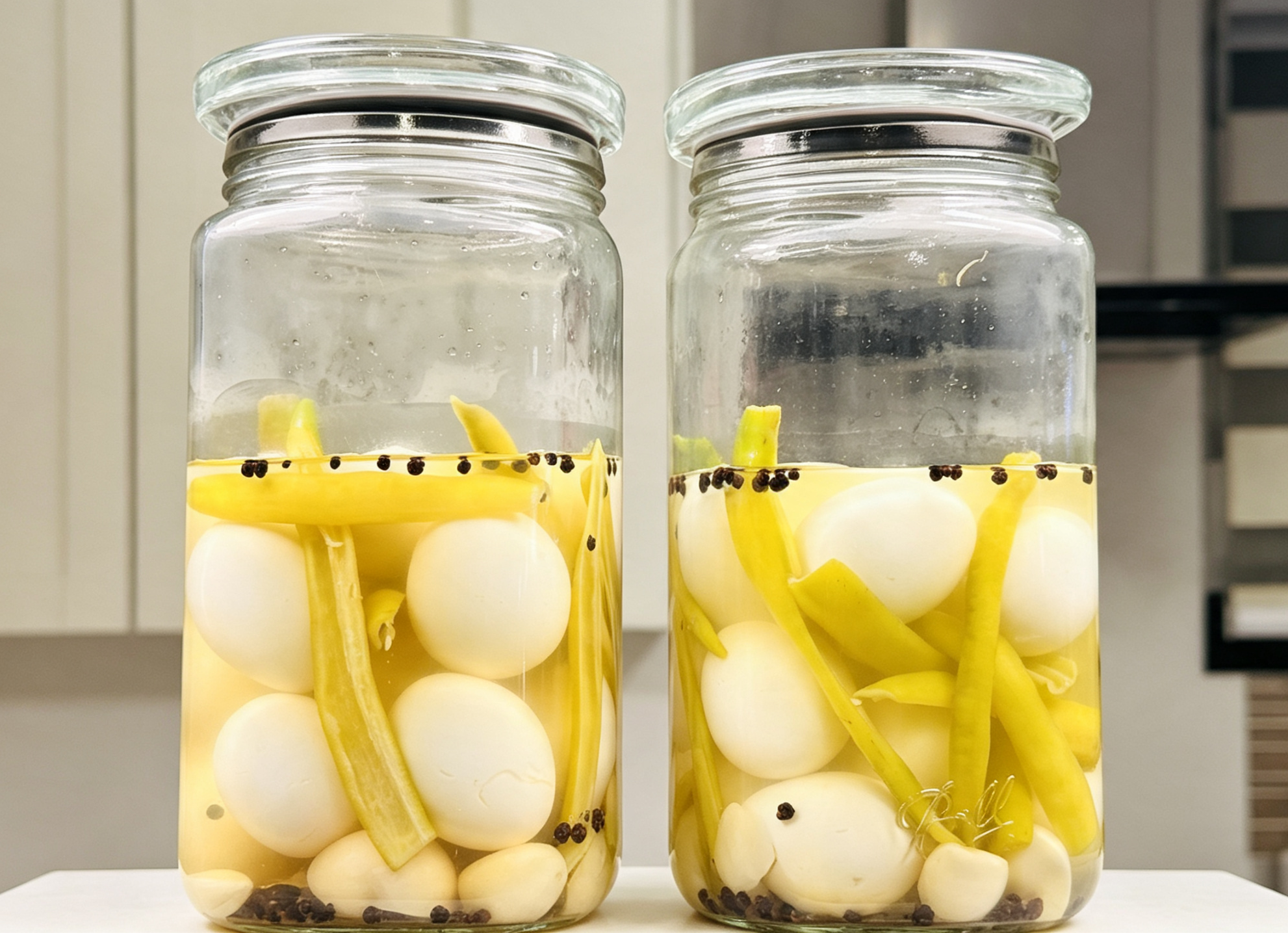
Pickled eggs are a simple way to transform ordinary hard-boiled eggs into something tangy, savory, garlicky, and slightly spicy. This Filipino-style pickled eggs recipe uses a vinegar-forward brine, whole garlic cloves, green chilies, black peppercorns, and bay leaves. The eggs are soaked in the flavorful brine for several days, allowing the vinegar and seasonings to gradually penetrate the eggs.
I especially like this pickled eggs recipe because it doesn’t require complicated equipment or ingredients. You simply boil the eggs, prepare the vinegar brine, add the seasonings to a clean jar, and pour the hot brine over the eggs.
The combination of vinegar, garlic, chilies, peppercorns, and bay leaves gives these pickled eggs a flavor that reminds me of Filipino-style preserved foods. They are tangy, savory, aromatic, and have just enough heat from the siling haba.
If you’ve never made homemade pickled eggs before, this is a great recipe to start with.
What Are Pickled Eggs?
Pickled eggs are hard-boiled eggs that are preserved and flavored by soaking them in a vinegar-based brine. The vinegar gives the eggs their characteristic tangy flavor while the salt, sugar, garlic, chilies, peppercorns, and bay leaves add additional layers of flavor.
Pickled eggs are popular in different parts of the world, particularly as a snack, appetizer, or bar food. Different cultures use different combinations of vinegar, spices, vegetables, and seasonings.
For this recipe, I wanted something straightforward and flavorful with ingredients that are easy to find in the Philippines.
The result is a Filipino-style pickled eggs recipe with plenty of garlic and green chilies.
Why You’ll Love This Pickled Eggs Recipe
- Simple ingredients – You only need eggs, vinegar, water, salt, sugar, and a few aromatics.
- Easy to prepare – There is no complicated cooking technique involved.
- Garlicky and flavorful – Whole garlic cloves slowly infuse the brine.
- Slightly spicy – Green chilies give the pickled eggs a pleasant kick.
- Make-ahead friendly – The flavor develops as the eggs sit in the refrigerated brine.
- Great for snacks – They can be eaten on their own or served alongside other dishes.
- Large batch – This recipe makes approximately 30 pickled eggs.
Tips for Making Pickled Eggs
1. Don’t skip the refrigeration
These pickled eggs are a refrigerated pickle, not a shelf-stable canned product. Keep the eggs refrigerated after preparing them.
Do not treat the sealed jar as shelf-stable simply because hot brine was poured into it.
2. Keep the eggs submerged
Make sure the eggs are covered by the brine. This allows the vinegar and seasonings to surround the eggs evenly.
3. Give the eggs time to pickle
You can eat the eggs after about 3 days, but allowing them to sit longer gives the flavors more time to develop.
4. Adjust the chilies to your taste
I use green chilies or siling haba. You can leave them whole for a milder infusion or slit them to allow more chili flavor to enter the brine.
5. Keep the garlic whole
For this recipe, the garlic cloves are peeled and left whole. They are placed directly into the jar rather than boiled with the vinegar.
This gives the finished pickled eggs a fresh garlic flavor while the hot brine gradually infuses the garlic.
6. Use a clean jar and utensils
Start with a clean glass jar and clean utensils. Avoid introducing unnecessary contamination into the finished pickled eggs.
Pickled Eggs Recipe: Perfectly Tangy and Garlicky na Lasang Penoy
Ingredients
For the Eggs
- 30 large eggs hard-boiled and peeled
For the Pickling Brine
- 4 cups vinegar
- 2 cups water
- 2 tablespoons salt
- 2 tablespoons sugar
Flavorings
- 2 whole heads garlic peeled and left whole
- 12 green chilies siling haba, whole or slit
- 1 tablespoon whole black peppercorns
- 2 bay leaves
Instructions
Hard-Boil the Eggs
- Place the eggs in a pot and cover them with water.
- Bring the water to a boil and cook the eggs for 10-12 minutes.
- Once cooked, cool the eggs and peel them carefully.
- Set the peeled eggs aside while you prepare the brine.
Prepare the Pickling Brine
- In a pot, combine: 4 cups white distilled vinegar, 2 cups water, 2 tablespoons salt, 2 tablespoons sugar
- Bring the mixture to a boil, then simmer for at least 2 minutes, stirring until the salt and sugar are completely dissolved.
Add the Flavorings and Eggs
- Place the following into a clean glass jar: Peeled whole garlic cloves, Green chilies, Whole black peppercorns, Bay leaves
Add the Eggs.
- Carefully place the 30 peeled hard-boiled eggs into the jar. Arrange them so the brine can circulate around the eggs.
Add the Hot Brine
- Pour the hot vinegar brine over the eggs and flavorings.
- Make sure the eggs are completely covered by the brine.
Cool the Jar
- Allow the jar to cool before refrigerating.
Refrigerate
- Once cooled, place the pickled eggs in the refrigerator.
Let the Eggs Pickle
- For the best flavor, allow the eggs to pickle for at least 3 days before eating.
- The garlic, chilies, peppercorns, and bay leaves will continue to infuse the vinegar brine as the eggs sit in the refrigerator.
Storage
Keep these pickled eggs refrigerated at all times.
Make sure the eggs remain covered by the vinegar brine and use clean utensils when removing eggs from the jar.
This recipe is intended as a refrigerated pickle, not a shelf-stable canned product. Do not store the finished eggs at room temperature.
Shelf Life
Because this is a homemade refrigerated pickled eggs recipe rather than a commercially validated shelf-stable product, do not store it at room temperature.
Keep the eggs refrigerated at all times and make sure they remain submerged in the brine. For best quality, consume within 1 month when properly refrigerated.
Frequently Asked Questions
How long do pickled eggs need to sit before eating?
I recommend waiting at least 3 days. This gives the vinegar and seasonings time to develop their flavor in the eggs. They will continue to become more flavorful as they sit.
Can I use cane vinegar instead of white vinegar?
White distilled vinegar is my preferred choice for this recipe because it has a clean, straightforward acidity. If substituting another vinegar, understand that it can change the flavor and characteristics of the finished pickle.
Can I use more chilies?
Yes. If you enjoy spicy food, you can increase the amount of green chilies. Slitting the chilies will also allow more of their flavor and heat to enter the brine.
Can I use fewer chilies?
Absolutely. You can reduce the chilies or leave them whole for a milder result.
Why are the garlic, chilies, and spices not boiled?
For this recipe, they are added directly to the jar so the hot brine can infuse them while they retain more of their fresh character. The garlic, chilies, peppercorns, and bay leaves will continue releasing flavor while the eggs are refrigerated.
Do I need to boil the vinegar?
The brine is brought to a boil in this recipe to help dissolve the salt and sugar and to provide a hot brine for the pickling process. Avoid prolonged boiling because vinegar is volatile and some of its sharp aroma can be lost during extended heating.
Can I store pickled eggs outside the refrigerator?
No. This recipe is designed for refrigerated storage. A hot brine or sealed jar does not by itself turn homemade pickled eggs into a shelf-stable canned product.
Can I use quail eggs?
Yes, quail eggs can be prepared in a similar refrigerated pickling style, although the smaller size means the ratio of eggs to brine and the flavor penetration will be different.
Can I make a smaller batch?
Yes. You can scale the recipe down as long as you maintain the same proportions of vinegar, water, salt, and sugar.
Pickled Eggs Recipe Video
For more recipe videos, visit our YouTube channel, Onyok Kokok, by clicking the link below.
https://www.youtube.com/@onyokkokok8538
Discover more step-by-step written recipes by clicking the link below.
Filipino Recipes & Cooking – Onyok Kokok Kitchen
Final Note
These homemade pickled eggs are an easy way to turn ordinary hard-boiled eggs into a flavorful snack with a distinctly tangy, garlicky, and slightly spicy character.
The combination of white vinegar, whole garlic, siling haba, black peppercorns, and bay leaves creates a simple but flavorful brine. The hot brine also allows the aromatics to begin infusing immediately, while several days of refrigeration give the flavors more time to develop.
If you love vinegar-based Filipino flavors, these pickled eggs are definitely worth trying.