Homemade Traditional Bibingka Like the Old Days
Homemade Traditional Bibingka (Bibingkang Galapong)
Homemade Traditional Bibingka is a classic Filipino rice cake made from fermented galapong (ground soaked rice), giving it the signature aroma, slightly tangy flavor, and soft, moist texture that many Filipinos associate with the Christmas season. Unlike quick versions that rely mostly on rice flour and baking powder, this recipe follows a more traditional approach using soaked rice, cooked rice, and yeast fermentation to recreate the authentic taste of old-fashioned bibingka.
Bibingka has long been one of the most beloved Filipino delicacies, especially during the Christmas season. It is traditionally sold outside churches after Simbang Gabi (early morning Christmas masses), freshly baked in clay pots lined with banana leaves and cooked with hot charcoal both above and below the bibingka. The gentle heat from the charcoal gives the rice cake its lightly toasted aroma while the banana leaves add a subtle earthy fragrance that makes traditional bibingka truly special.
The heart of an authentic bibingka is galapong, a batter made from soaked rice that has been ground into a smooth paste. Traditionally, the soaked rice was naturally fermented for several hours – or even overnight – in large earthen jars (banga). During this fermentation process, naturally occurring microorganisms convert some of the rice carbohydrates into organic acids. This develops the mildly sour aroma that gives traditional bibingka its distinct flavor and helps improve its texture.
Today, recreating that natural fermentation at home can be difficult because it depends on naturally occurring microbes, temperature, and time. To make the process more reliable and practical, this recipe uses yeast. The yeast speeds up fermentation by producing carbon dioxide and fermentation by-products that help develop the characteristic aroma while also giving the batter a lighter texture. Although instant yeast technically does not require blooming before use, blooming it in warm water with a little sugar is still a helpful step. It confirms that the yeast is alive and active before adding it to the batter, preventing wasted ingredients if the yeast has already expired.
For the best results, do not skip soaking the rice. The uncooked rice should soak in plenty of water overnight or for at least 6 hours. This softens the grains, allowing them to blend into a silky-smooth galapong. Proper soaking also contributes to the soft, tender crumb that makes Homemade Traditional Bibingka so enjoyable.
Another ingredient that helps create a smooth batter is cooked rice. While the soaked rice forms the foundation of the galapong, the cooked rice adds moisture and contributes to the soft and slightly chewy texture after baking.
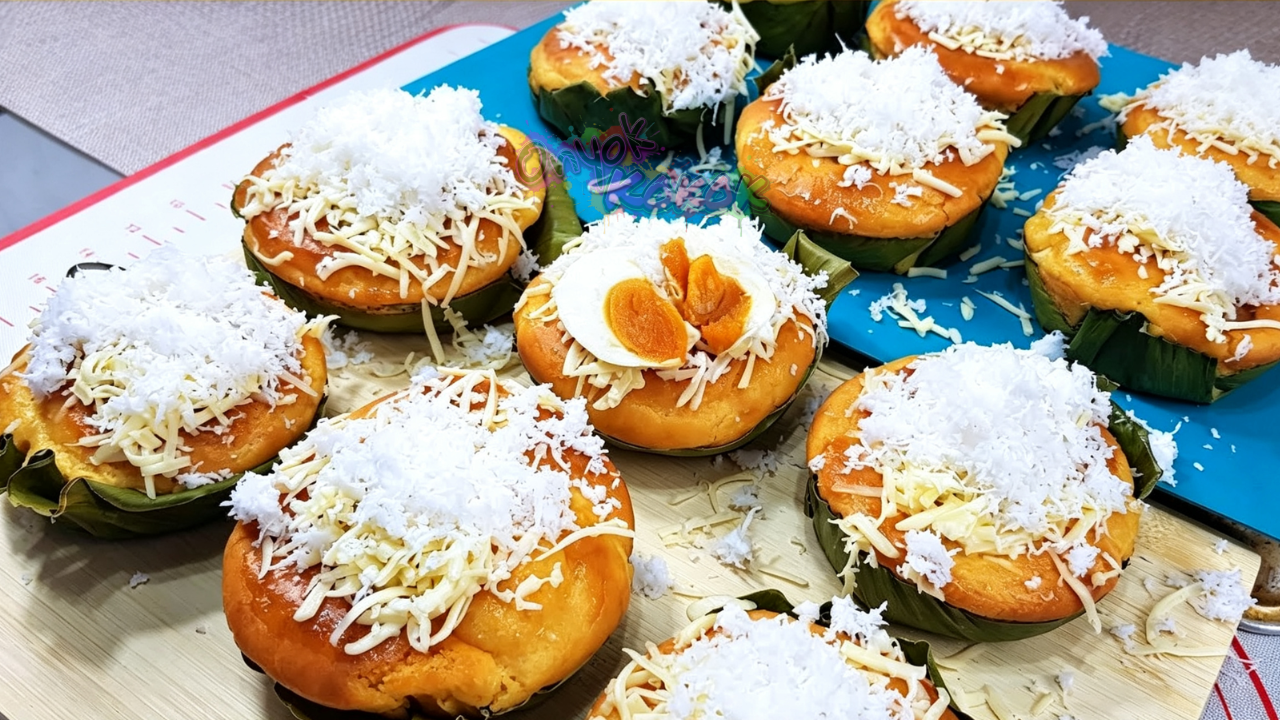
Once fermented, the batter is mixed with rich egg yolks before being poured into banana leaf-lined molds. The banana leaves do more than simply prevent sticking – they provide the unmistakable aroma associated with traditional bibingka. Lightly heating the banana leaves before lining the molds makes them more flexible and releases their natural oils, enhancing both aroma and presentation.
Each bibingka is topped with slices of salted egg before baking. Once fully cooked, it is generously brushed with butter and finished with grated cheddar cheese and freshly grated coconut. The salty richness of the eggs, creamy butter, slightly sharp cheese, and naturally sweet coconut create the perfect balance of flavors in every bite.
Although today’s ovens cannot perfectly replicate the traditional charcoal-fired clay pot, baking at a moderate temperature still produces a wonderfully soft and moist Homemade Traditional Bibingka that captures the nostalgic taste of Filipino Christmas celebrations.
Whether you’re preparing this for Noche Buena, Simbang Gabi, family gatherings, or simply craving authentic Filipino kakanin, this Homemade Traditional Bibingka recipe brings generations of tradition into your own kitchen.
10 Tips for the Best Homemade Traditional Bibingka
1. Soak the rice overnight or for at least 6 hours.
Proper soaking softens the grains, making them easier to blend into a smooth galapong.
2. Blend until completely smooth.
Rub a little batter between your fingers. If you still feel tiny grains, continue blending.
3. Bloom the instant yeast first.
Although instant yeast can be mixed directly into the batter, blooming it first confirms that the yeast is still active.
4. Use warm – not hot – water for blooming.
Water that is too hot may kill the yeast.
5. Don’t skip the 2-hour fermentation.
Fermentation develops the authentic aroma that traditional bibingka is known for.
6. Heat the banana leaves first.
This prevents tearing and releases their natural aroma.
7. Stir the batter after fermentation.
Mix gently to deflate excess air before adding the egg yolks.
8. Do not overfill the molds.
Leave room for the bibingka to rise during baking.
9. Brush with butter while still hot.
The butter melts beautifully into the bibingka for extra richness.
10. Serve warm.
Freshly baked bibingka tastes best while still warm with melted butter and cheese.
Homemade Traditional Bibingka Recipe – Bibingkang Galapong
Ingredients
Batter
- 2 cups uncooked rice washed and soaked overnight or at least 6 hours
- ½ cup cooked rice
- 1½ cups evaporated milk
- ⅔ cup white sugar
- ¼ teaspoon salt
- 6 large egg yolks
Yeast Mixture
- ¼ cup warm water
- 1 tablespoon white sugar
- 2½ teaspoons instant yeast
Toppings
- 4 salted eggs sliced
- Butter
- Grated cheddar cheese
- Fresh grated coconut
Mold Size: 4 inches
Yield: 12 bibingka
Instructions
- Prepare the yeast mixture by combining the warm water, sugar, and instant yeast. Stir well and let it bloom for about 5 minutes.
- Drain the soaked rice thoroughly using a strainer.
- Place the soaked rice and evaporated milk into a blender. Blend for about 2 minutes or until completely smooth.
- Add the cooked rice, sugar, salt, and bloomed yeast. Blend again until smooth.
- Strain the batter into a bowl.
- Cover tightly with cling wrap and then a towel to help maintain a warm environment. Ferment for 2 hours.
- While waiting, lightly heat the banana leaves directly over the stove until softened.
- Cut the banana leaves into approximately 6-inch circles and line the 4-inch molds.
- After fermentation, stir the batter to deflate it. Add the egg yolks and mix until fully incorporated.
- Pour approximately ⅓ cup plus 1 tablespoon of batter into each prepared mold.
- Top each bibingka with slices of salted egg.
- Bake in a preheated 170°C (338°F) oven for about 30 minutes or until fully cooked.
- Immediately brush with butter while still hot.
- Top generously with grated cheddar cheese and freshly grated coconut.
- Serve warm and enjoy.
Other Ways of Cooking
This recipe is specifically developed for a conventional oven. Because the batter is relatively thin and the banana leaves require gentle, even heat, an oven produces the most consistent results.
While traditional bibingka is cooked using charcoal above and below clay pots, replicating that method at home requires specialized equipment and is beyond the scope of this recipe.
Storage
Store cooled bibingka in an airtight container in the refrigerator for up to 3 days.
To reheat, microwave for 20–30 seconds or warm in a 160°C oven for about 5-8 minutes until heated through. Brush with a little butter before serving if desired.
Frequently Asked Questions
Q: Can I use rice flour instead of soaked rice?
A: This recipe is designed specifically for traditional galapong made from soaked rice. Rice flour will produce a different texture and flavor.
Q: Why do I need to soak the rice overnight?
A: Soaking softens the rice, allowing it to blend into a very smooth batter and produce the tender texture traditional bibingka is known for.
Q: Why add yeast if traditional galapong is naturally fermented?
A: Traditionally, galapong ferments naturally through microorganisms present in the environment, producing a mild sour aroma over several hours. Using yeast helps mimic many of those fermentation characteristics more consistently and in less time, developing a pleasant fermented aroma and a lighter texture. While it is not identical to spontaneous fermentation, it is a practical and reliable home-kitchen adaptation.
Q: Can I skip blooming instant yeast?
A: Yes, instant yeast can be mixed directly into the batter. However, blooming it first is recommended to verify that the yeast is still active, especially if it has been stored for a while.
Q: Why is my batter not fermenting?
A: Your yeast may be inactive, the water may have been too hot, or the room temperature may be too cold. Fresh, active yeast and a warm environment help ensure proper fermentation.
Q: Can I prepare the batter ahead of time?
A: It is best to bake the batter after the 2-hour fermentation for the best flavor and texture.
Q: Can I freeze bibingka?
A: Freezing is not recommended for this traditional version, as it can affect the soft texture and fresh aroma of the bibingka.
Q: What cheese works best?
A: Grated cheddar cheese provides the classic sweet-salty flavor commonly found in traditional Filipino bibingka.
Homemade Traditional Bibingka Recipe Video
For more recipe videos, visit our YouTube channel, Onyok Kokok, by clicking the link below.
https://www.youtube.com/@onyokkokok8538
Discover more step-by-step written recipes by clicking the link below.
Filipino Recipes & Cooking – Welcome to Onyok Kokok Kitchen
Final Note
Homemade Traditional Bibingka is more than just a rice cake – it’s a cherished Filipino holiday tradition. By using soaked rice, authentic galapong, and a simple yeast fermentation, you can recreate the nostalgic aroma and flavor that many remember from freshly baked bibingka sold outside churches during Simbang Gabi. Although modern ovens differ from traditional charcoal-fired clay pots, this recipe brings you remarkably close to that classic experience. Take your time with the soaking and fermentation, and you’ll be rewarded with soft, fragrant bibingka that’s perfect for sharing with family and friends throughout the Christmas season.